- Both Dysport and Botox are FDA-approved for masseter reduction, with similar total costs ($400 to $800) and duration (3 to 6 months).
- Dysport has a faster onset (2 to 5 days) and diffuses more widely, making it well-suited for larger masseter muscles and patients where Botox wears off quickly.
- Botox has a slower onset (1 to 2 weeks) and spreads less, offering precise placement that is ideal for first-time patients and those with smaller or asymmetric muscles.
- Full jaw slimming results take 4 to 6 weeks as the masseter muscle gradually atrophies; the appointment itself takes 20 to 30 minutes with no downtime.
- Skin Rejuvenation Clinic ranks in the top 0.1% of all Botox accounts nationwide, reflecting deep experience with cosmetic neurotoxins.
What Is Masseter Reduction and Who Is It For?
Masseter reduction relaxes the masseter muscles at the sides of the jaw using botulinum toxin, shrinking them gradually to create a slimmer, more V-shaped face. It also relieves bruxism, jaw clenching, and the headaches or soreness that come with them.
The best candidates want to soften a square or wide jawline, grind their teeth or clench at night, or have jaw tension and pain. It does not change bone structure. It reduces the volume of an overdeveloped muscle, which can meaningfully reshape the lower face.
How Do Dysport and Botox Work for Jaw Slimming?
Botox (onabotulinumtoxinA) and Dysport (abobotulinumtoxinA) both block the nerve signals that tell the masseter to contract. With reduced muscle activity, the masseter gradually shrinks over 4 to 6 weeks. The two formulas use the same mechanism but differ in how they behave after injection.
Botox stays closer to the injection site, making it useful when precise placement matters or the muscle is smaller. Dysport uses a slightly smaller protein molecule that diffuses more widely in the tissue. For the masseter, that wider spread is often an advantage because the muscle is large and fan-shaped.
What Are the Key Differences Between Dysport and Botox?
Onset is the most clinically relevant difference. Dysport kicks in within 2 to 5 days; Botox takes 1 to 2 weeks. Diffusion is the second key difference: Dysport spreads further, which suits a large fan-shaped muscle like the masseter. Botox stays more localized, which suits precise or asymmetric cases.
Unit counts differ, but total cost works out similarly. Botox requires 25 to 50 units per side; Dysport requires roughly 2.5 to 3 times as many, but at a proportionally lower cost per unit. Total treatment in the Minneapolis area runs $400 to $800 with either product. Duration is the same: 3 to 6 months for both.
What Happens During a Masseter Reduction Appointment?
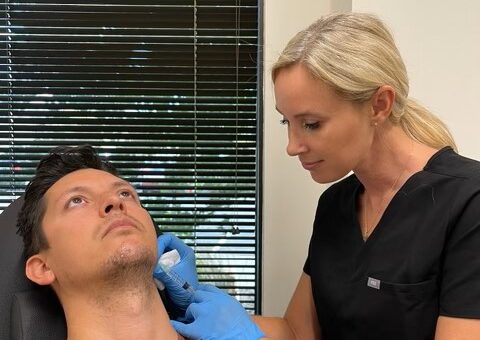
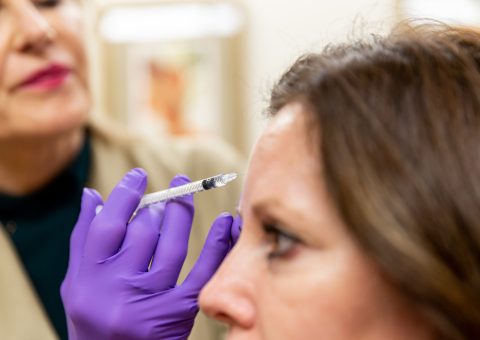
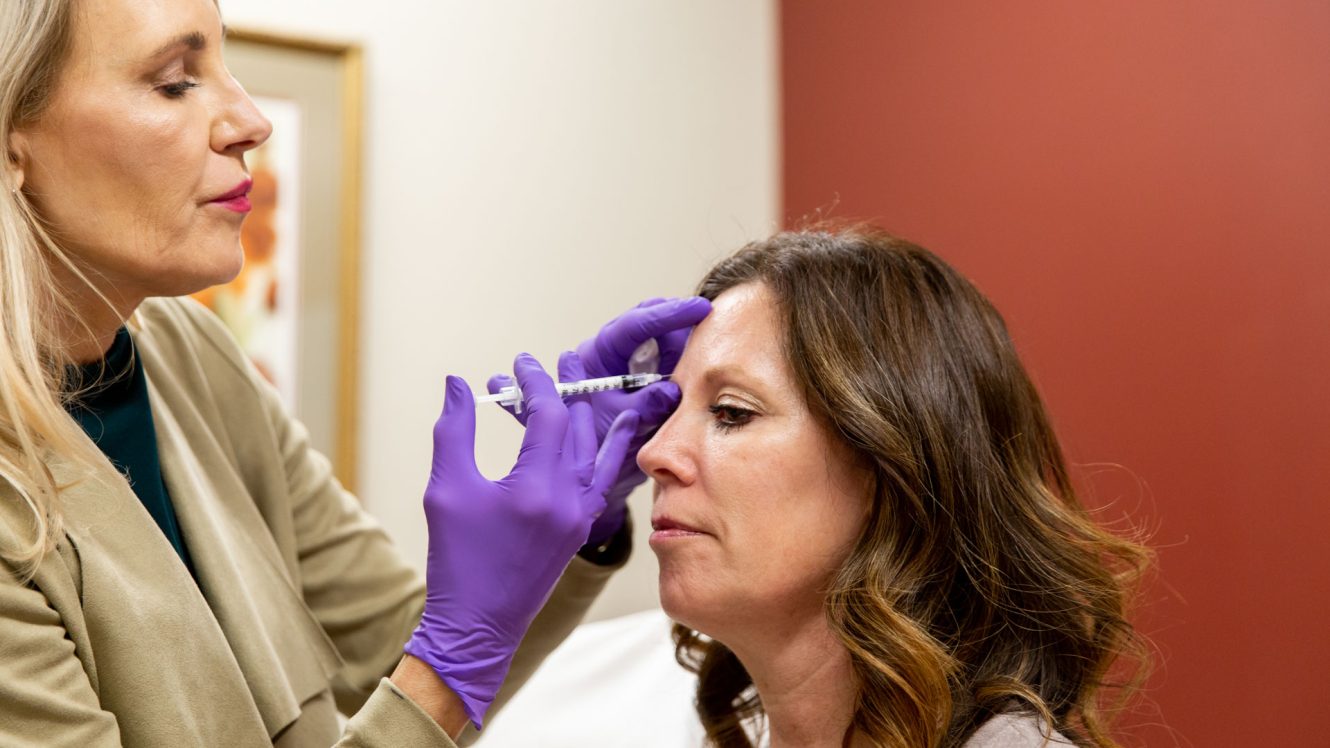
The appointment takes 20 to 30 minutes. I cleanse the skin, map the masseter on both sides, and inject bilaterally into the muscle bulk. No dressings, no restrictions, no downtime. Mild swelling or soreness may appear for 1 to 2 days. Initial relaxation is noticeable within 3 to 7 days, sooner with Dysport. Full slimming becomes visible at 4 to 6 weeks. At follow-up, I assess symmetry and determine whether any touch-up is needed before you leave the treatment window.
How Much Does Masseter Reduction Cost in Minneapolis?
Expect to pay $400 to $800 for masseter reduction in the Minneapolis area, with the exact amount depending on muscle size and which neurotoxin is used. Botox and Dysport land in a similar price range when priced by total treatment rather than per unit. Per-unit pricing can be misleading because the two products require different unit counts. Always ask what the full bilateral treatment will cost before booking.
At your consultation, bring photos of your jawline from different angles. They help us assess how much the masseter is contributing to width and set realistic expectations. Most patients see their best results after two consecutive treatment cycles.
Frequently Asked Questions
What is masseter reduction and what does it treat?
Masseter reduction uses botulinum toxin injections to relax and gradually shrink the masseter muscles along the jaw, creating a slimmer, more V-shaped jawline. It also relieves bruxism (teeth grinding), jaw clenching, and associated jaw pain or headaches.
What is the difference between Dysport and Botox for jaw slimming?
Dysport (abobotulinumtoxinA) has a faster onset of 2 to 5 days and diffuses more widely, making it well-suited for the large masseter muscle. Botox (onabotulinumtoxinA) has a slower onset of 1 to 2 weeks, spreads less, and offers more precise placement, which makes it a reliable choice for first-time patients.
How long does masseter reduction last with Dysport or Botox?
Both Dysport and Botox provide masseter reduction results that last 3 to 6 months. Most patients return every 4 to 6 months to maintain jaw slimming. With consistent treatment, some patients find their masseter muscles stay smaller over time and require fewer units per session.
How many units of Botox or Dysport are needed for masseter reduction?
Botox typically requires 25 to 50 units per side for masseter reduction. Dysport requires more units because its dosing ratio is different, approximately 2.5 to 3 Dysport units per 1 Botox unit. The total treatment cost is similar between the two because Dysport has a lower cost per unit.
How much does masseter reduction cost in Minneapolis?
Masseter reduction costs between $400 and $800 in the Minneapolis area, depending on which neurotoxin is used and how many units are needed. Both Dysport and Botox fall within a similar total cost range. Always ask for a total treatment cost rather than a per-unit price when comparing providers.
Who is a good candidate for masseter reduction?
Good candidates for masseter reduction include people who want a slimmer or more oval jawline, those with a square jaw caused by enlarged masseter muscles, and patients who grind their teeth or clench their jaw. Masseter reduction is not appropriate for patients with certain neuromuscular conditions or for those who are pregnant or breastfeeding.
What happens during a masseter reduction appointment?
A masseter reduction appointment takes 20 to 30 minutes. The injector cleanses the skin, maps the masseter muscle on both sides, and administers injections bilaterally. There is no downtime. Mild swelling may occur for 1 to 2 days. Initial results appear within 3 to 7 days, with full jaw slimming visible at 4 to 6 weeks.
Is Dysport or Botox safer for masseter reduction?
Both Dysport and Botox are FDA-approved botulinum toxin formulations with well-established safety profiles for cosmetic use. Neither is inherently safer than the other for masseter reduction. The safety of the treatment depends most on the skill and experience of the injector. Skin Rejuvenation Clinic ranks in the top 0.1% of all Botox accounts nationwide.
What are the side effects of masseter reduction?
Common side effects of masseter reduction include mild soreness, swelling, or redness at the injection sites for 1 to 2 days. Rare side effects include temporary asymmetry, mild muscle weakness when chewing firm foods, or a headache in the first 24 hours. These effects are temporary and resolve on their own.
When will I see results after masseter reduction?
Initial muscle relaxation is noticeable within 3 to 7 days after treatment. With Dysport, onset can be as early as 2 to 3 days. Full jaw slimming, as the masseter muscle gradually atrophies, becomes visible at 4 to 6 weeks. The full reshaping effect is most apparent after the first 4 to 6 weeks.
Should I choose Dysport if Botox wears off quickly?
Yes. If you have noticed that Botox wears off sooner than 3 months, Dysport is often a better choice for masseter reduction. Some patients metabolize onabotulinumtoxinA more quickly and find that abobotulinumtoxinA provides a longer-lasting effect. Your injector can help you assess which formula is likely to perform better for your physiology.
Can masseter reduction help with bruxism and jaw pain?
Yes. Masseter reduction is highly effective for bruxism (teeth grinding) and jaw clenching. By relaxing the masseter muscle, botulinum toxin reduces the force of clenching, which relieves jaw pain, muscle tension headaches, and can reduce tooth wear. Many patients seek masseter reduction for functional relief rather than cosmetic reasons.
Jordan Rachel Kopfer, PA-C
Cosmetic Injector, Injector Lead | Skin Rejuvenation Clinic
Jordan Rachel Kopfer, PA-C is a board-certified Physician Assistant and Injector Lead at Skin Rejuvenation Clinic in Edina, MN, specializing in cosmetic injectables, neuromodulators, and advanced facial contouring. She has performed hundreds of masseter reduction treatments and approaches every patient with a precision-first philosophy.
References
- U.S. Food and Drug Administration. “Botox Cosmetic (onabotulinumtoxinA) Prescribing Information.” FDA.gov.
- U.S. Food and Drug Administration. “Dysport (abobotulinumtoxinA) Prescribing Information.” FDA.gov.
- Wu, W.T. “Microbotox of the Lower Face and Neck.” Journal of the American Academy of Dermatology, 2015.
- Chang, C.S. et al. “Botulinum Toxin Type A for Masseter Reduction in Asians.” Aesthetic Surgery Journal, 2017.
- American Society of Plastic Surgeons. “Botulinum Toxin National Statistics Report.” ASPS.org, 2023.