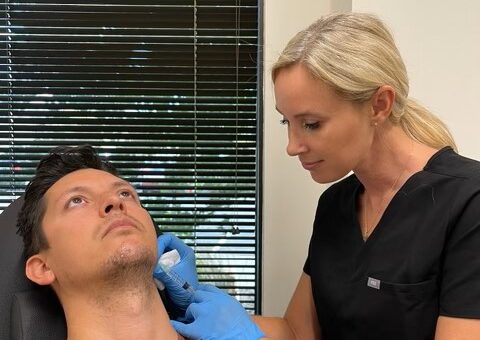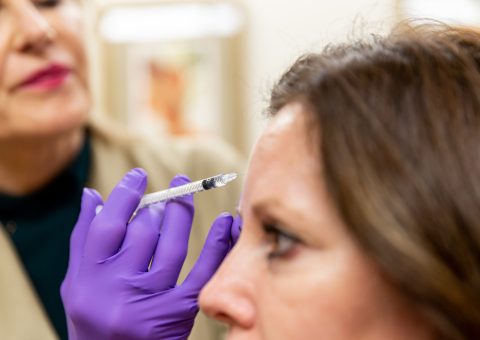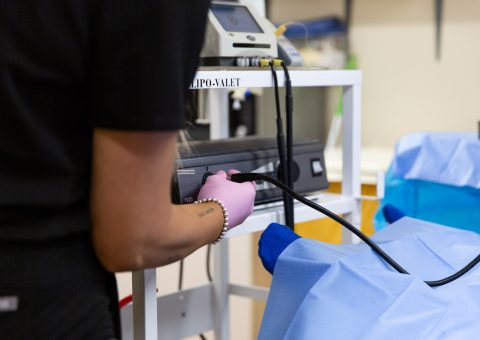
TL;DR: The best candidates for PDO threading are adults dealing with mild to moderate skin laxity who want a non-surgical way to lift sagging tissue, sharpen the jawline, and trigger long-term collagen growth. While many patients are in their thirties through sixties, candidacy depends far more on skin quality, tissue position, and treatment goals than on age alone. Strong fits include patients with early jowls, a softening jawline, brow drop, marionette lines, or laxity in the lower face and neck. PDO threading uses dissolvable Polydioxanone sutures to physically reposition tissue while stimulating new collagen production over the months that follow. At Skin Rejuvenation Clinic in Edina, MN, candidacy is confirmed through a consultation that reviews your goals, facial structure, and overall health.
Most aesthetic treatments are evaluated on what they erase. PDO threading is evaluated on what it lifts and rebuilds. Our PDO threading treatment, also called a PDO thread lift, uses biodegradable Polydioxanone sutures placed beneath the skin to reposition sagging tissue and trigger new collagen formation. As new collagen develops around the threads, it helps reinforce the skin’s underlying support structure, which is why many patients continue seeing improvement even after the threads themselves have dissolved. That means the candidacy conversation is less about chasing surface concerns and more about whether your face has begun to drift downward and whether your tissue is in a position to respond.
For most healthy adults in the early to mid stages of facial laxity, the answer is yes. The treatment works best for patients who want a meaningful lift without the recovery time of surgery, and who appreciate a regenerative approach that continues delivering results long after the threads themselves have dissolved.
Strong Candidates: Lower Face and Jawline
The clearest candidacy profile for PDO threading is the patient noticing early structural changes in the lower face. Jowls beginning to form. A jawline that used to be sharp now looking softer. Marionette lines deepening on either side of the mouth. These are gravitational changes, not volume changes, which is exactly what threading is built to address.
The threads physically pull tissue back into a more youthful position and hold it there while new collagen rebuilds the supportive scaffold underneath. For patients who feel their face is dropping but not deflating, this is often the treatment that delivers the most natural-looking refresh.
Patients with healthy skin elasticity generally respond best, because the skin can adapt more effectively to its newly supported position. Significant sun damage or very thin skin does not necessarily rule out treatment, but it may influence how the treatment plan is designed and how many threads are placed.
Strong Candidates: Mid-Face and Cheeks
PDO threading is also a strong fit for patients in their forties and fifties who are beginning to see flatness in the cheeks combined with a downward shift of facial volume. When mid-face tissue migrates south, it can blur the cheekbones and add weight to the lower face. Threading repositions that tissue, restoring the lift of the cheekbones and reshaping the proportion of the face.
For these patients, threading often pairs well with dermal fillers, where fillers rebuild lost volume in the cheekbones and threads hold that restored structure in place. Our team in Edina builds these combination plans regularly because facial aging rarely presents as a single issue.
Strong Candidates: Brow, Neck, and Nasolabial Folds
Beyond the jawline and mid-face, threading is also a meaningful option for patients with early brow drop, mild neck laxity, or deepening nasolabial folds. The brow is a subtle but powerful candidacy zone because even a small lift dramatically refreshes the eye area. Patients who feel they look tired even when well-rested often benefit from targeted threading in this region.
Neck candidacy is more selective. Patients with mild laxity and good skin quality typically see strong improvement. Those with significant sagging, banding, or severe sun damage in the neck area may be better served by a different conversation, including non-surgical tightening, energy-based treatments, or in some cases a surgical option.
A Quick Self-Check: You May Be a Good Candidate If
- You are noticing mild to moderate skin laxity, particularly in the lower face, jawline, brow, or neck
- You want a non-surgical lift that works with your body’s own collagen response
- You are seeing early jowls, softer jawline, brow drop, or deeper marionette lines
- You are comfortable with gradual, natural-looking results that build over weeks to months
- You are in good general health, without active autoimmune flares or untreated bleeding disorders
- You do not smoke, or you are willing to pause for the treatment and recovery window
- You can avoid certain medications and supplements before and after treatment, as guided by your provider
This is a starting point, not a substitute for a medical assessment. Final candidacy is always confirmed in person with our team in Edina.
Who Should Hold Off or Consider a Different Option
PDO threading is broadly well tolerated, but it is not the right fit for everyone. Patients who are pregnant or breastfeeding are advised to wait. Those with active skin infections, untreated cold sores, or open wounds in the treatment area need to heal fully before scheduling. Anyone with a bleeding disorder or on blood-thinning medications such as Coumadin, Eliquis, or Plavix should speak with their prescribing physician about timing, since bruising and bleeding risk are elevated.
Patients with significant sagging in the neck or jowls where the laxity is more advanced may not get the result they are after from threading alone. In those cases, our team will be direct about it during your consultation and walk through what other paths might serve you better, including energy-based skin tightening, combination plans, or surgical referrals. Patients who have recently lost significant weight may benefit from waiting until their facial changes have stabilized, and patients planning a facelift within the next few months are typically better served by waiting until after that surgery.
People hoping for a dramatic, surgical-level change are also usually better matched with a different option. The best candidates are looking to look like a refreshed version of themselves rather than an entirely different person. Threading delivers a real, visible lift, but it is a refined and natural one, not the structural change of a facelift.
How Lifestyle and Preparation Affect Candidacy
The treatment performs best when the body is set up to support the healing and collagen response. That means hydration, balanced nutrition, consistent SPF use, and not smoking. Smokers can still be treated, but nicotine constricts blood vessels and slows tissue repair, which dulls results.
There are also some specific pre-treatment steps that strengthen candidacy and outcome. Avoid alcohol for at least one week before treatment. Stop vitamin E, fish oil, garlic, ginger, ginseng, and similar blood-thinning supplements about two days before. Avoid aspirin-based products and ibuprofen for at least one week beforehand unless your physician advises otherwise. Patients who follow these steps closely tend to bruise less and recover more smoothly.
Good candidates are also willing to follow post-treatment instructions carefully, including avoiding excessive facial movement, strenuous exercise, and sleeping pressure on the treated areas during the initial healing period. The threads need time to settle into position and integrate with the surrounding tissue, and patients who respect that window typically see longer-lasting results.
The Consultation: Where Candidacy Is Confirmed
Candidacy is not something we decide from a checklist. It happens in person, with a clinical look at your facial structure, a review of your goals, and an honest conversation about what threading can and cannot do for your situation.
Our providers have extensive experience performing PDO threading, and that experience matters most when threading is the right fit and when another path will serve you better, whether that means pairing it with fillers, microneedling, Ultherapy, or laser resurfacing, adjusting the timing, or recommending something else entirely. It is why patients across Edina, Bloomington, and the wider Twin Cities have trusted us with their non-surgical lift work since 2004.
Find Out If PDO Threading Is Right for You
If the candidacy signals above sound familiar, the next step is a consultation. Our team can assess your face in person, walk through realistic outcomes, and map out a plan tailored to your goals.
Reach out to schedule a consultation in Edina. We will look at where your face is now, what you want to address, and whether PDO threading or a combination plan is the right next move.
Frequently Asked Questions: PDO Threading Candidacy
Who is a good candidate for PDO threading?
The best candidates for PDO threading are healthy adults with mild to moderate skin laxity in the lower face, jawline, cheeks, brow, or neck who want a non-surgical lift. Candidacy depends more on skin quality and tissue position than on age.
What age is best for a PDO thread lift?
Most PDO threading patients are in their thirties through sixties, but age alone does not determine candidacy. Patients with early gravitational changes and healthy skin elasticity respond best, whatever their age.
Who should not get PDO threads?
Patients who are pregnant or breastfeeding, have active skin infections or open wounds in the treatment area, have bleeding disorders, or take blood thinners without physician clearance should hold off. Advanced sagging is usually better served by other treatments.
Does PDO threading work for jowls?
Early jowls are one of the strongest indications for PDO threading. Threads reposition the sagging tissue and stimulate collagen that reinforces the jawline, though advanced jowling may need a combination plan or surgical consultation.
How long do PDO threading results last?
The lift from PDO threading typically lasts twelve to eighteen months. The threads dissolve within about six months, but the new collagen they stimulate continues supporting the skin well after that.
Is PDO threading surgery?
No. PDO threading is a minimally invasive, non-surgical procedure that places dissolvable sutures beneath the skin through small entry points, with far less downtime than a facelift.
Can PDO threads be combined with fillers?
Yes, and the combination is common. Fillers rebuild lost volume in areas like the cheekbones while threads lift and hold repositioned tissue, addressing both deflation and descent at once.
How should I prepare for PDO threading?
Avoid alcohol for a week before treatment, stop blood-thinning supplements such as fish oil and vitamin E about two days prior, and avoid aspirin and ibuprofen for a week unless your physician advises otherwise. Following prep guidance reduces bruising.
What is the downtime after a PDO thread lift?
Most patients return to normal routines within a few days. Expect mild swelling, tenderness, or bruising, and plan to avoid strenuous exercise, excessive facial movement, and sleeping face-down during the initial healing window.
Will PDO threading look natural?
Yes, when performed by an experienced provider. Threading delivers a refined, gradual lift that makes you look like a refreshed version of yourself rather than producing the structural change of a facelift.
Jordan Rachel Kopfer, PA-C
Cosmetic Injector / Injector Lead | Skin Rejuvenation Clinic, Edina, MN
Jordan Rachel Kopfer is a board-certified Physician Assistant and lead cosmetic injector at Skin Rejuvenation Clinic in Edina, Minnesota. With extensive training in advanced aesthetic treatments, she specializes in individualized treatment planning, neuromodulators, dermal fillers, and non-surgical facial rejuvenation. Jordan is known for her precision, patient-first approach, and commitment to natural-looking outcomes that align with each patient’s goals.
References
- Journal of Cutaneous and Aesthetic Surgery. Thread Lift: Classification, Technique, and Review of Outcomes. jcasonline.com
- American Society of Plastic Surgeons. Non-Surgical Facial Rejuvenation Procedures. plasticsurgery.org