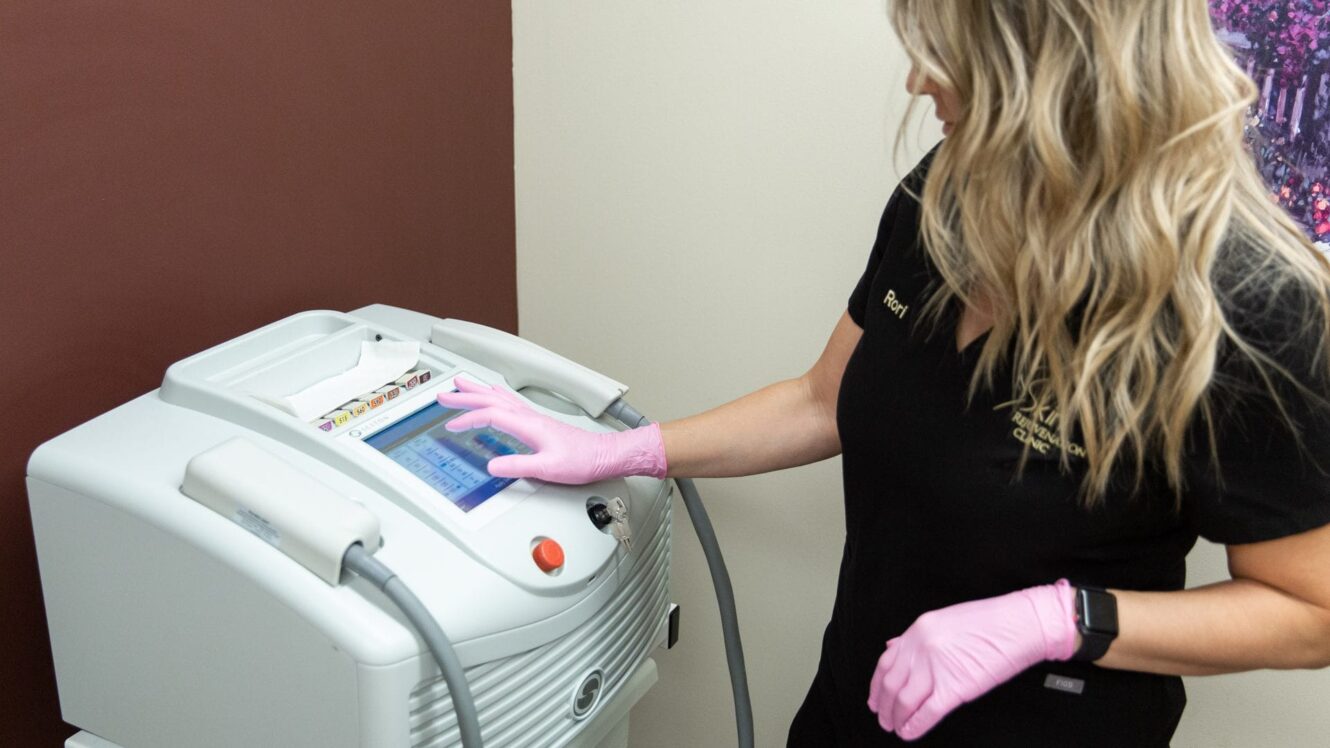
Halo and Moxi are both fractional lasers from Sciton, but they serve different goals. Halo is a hybrid fractional laser (ablative plus non-ablative) designed for deeper correction of sun damage, pigmentation, and texture, with 5 to 7 days of social downtime. Moxi is a non-ablative fractional laser with minimal downtime (1 to 2 days), best for prevention, tone, and maintenance between more intensive treatments.
Short version: Choose Halo if you want visible correction of existing damage. Choose Moxi if you want prevention, glow, and pre-event polish.
If you have been researching fractional laser treatments in the Twin Cities, Halo and Moxi keep coming up together. Both are made by Sciton. Both are offered at Skin Rejuvenation Clinic in Edina. But they are built for very different patients, different skin concerns, and different stages of life. This guide walks through how each laser works, who each one is best for, and the practical difference in results so you can walk into your consultation already leaning one direction.
What Is the Halo Laser?
Halo is a hybrid fractional laser, and it is the first and only laser that delivers ablative and non-ablative wavelengths to the same microscopic treatment zones at the same time. It combines a 2940 nm ablative wavelength with a 1470 nm non-ablative wavelength in a single pass. The ablative component removes damaged surface skin. The non-ablative component drives deeper collagen remodeling without disturbing the skin around it. That combination is what makes Halo different from every other resurfacing laser on the market.
The practical benefit is dramatic correction with a recovery window shorter than traditional ablative treatments. Halo addresses sun damage, hyperpigmentation, enlarged pores, fine lines, acne scarring, and uneven texture, often in just one or two sessions. Results continue building in over the following six months as new collagen forms.
What Is the Moxi Laser?
Moxi uses a non-ablative 1927 nm wavelength to gently correct tone, even out pigmentation, and address the early signs of aging. It is often called the little sister of Halo because it targets similar concerns at a much lighter intensity.
Moxi works well on all skin tones, including skin types that historically could not tolerate more aggressive resurfacing. It is our go-to recommendation when a patient wants a meaningful result with no social downtime, and it is the right tool for prevention and maintenance in patients in their twenties, thirties, and forties.
Halo vs Moxi: The Real Differences
The practical difference comes down to depth and downtime. Halo reaches further into the dermis, so it can correct pigment, texture, and fine lines that Moxi simply cannot reach. You pay for that depth in recovery time.
Results also look different. After a Halo treatment, patients typically describe the change as visible correction, the kind where friends ask if something changed. After a Moxi, the change is softer and often described as looking healthy, refreshed, and lit from within. Neither is better. They are different goals entirely.
How Much Downtime Should You Plan For?
Halo recovery runs five to seven days of social downtime. The first two days you will look flushed and swollen, similar to a moderate sunburn. On days three and four, tiny dark spots called MENDs appear across the treated area. These are damaged cells being pushed out of the skin, and they flake off naturally between days five and seven, revealing fresh, brighter skin underneath.
Moxi is far easier. Day one looks like a mild sunburn. By day two, most patients are back to work and applying makeup. A sandpaper-like texture lingers for another two or three days as the micro-exfoliation completes.
Who Is the Best Candidate for Each Laser?
Halo is the stronger choice for patients over 35 with visible sun damage, deeper pigmentation, acne scarring, or fine lines that have not responded to lighter treatments. It is also the right pick before a milestone event when you have a full week to recover privately and want the largest single result possible.
Moxi is the better fit for patients in their twenties through forties who want to stay ahead of aging, even out tone, or freshen up before a wedding, reunion, or photoshoot with minimal disruption. It is also the safer option for patients with richer skin tones where ablative lasers carry a higher risk of post-inflammatory pigmentation.
If you are not sure which side you fall on, our providers map your specific skin concerns to the laser that will actually deliver the result you are looking for during your consultation, so you are not guessing.
Can You Combine Halo and Moxi?
Yes, and many of our patients do. A common long-term protocol is a single Halo session once or twice per year for correction, with Moxi every three to four months in between for maintenance. We also combine either treatment with BBL Hero in the same visit to address tone and texture at once.
For Minnesota patients specifically, fall and winter are the ideal seasons for either laser. Sun exposure after resurfacing increases the risk of post-inflammatory hyperpigmentation, and the long Minnesota winter makes strict sun avoidance significantly easier than treating in June or July.
How to Decide Which Laser Is Right for You
Start with one question: am I correcting, or am I preventing? If you see damage in the mirror that you want gone, Halo is built for that job. If your skin looks pretty good and you want to keep it that way or add a subtle glow, Moxi is the right tool.
Budget and schedule also matter. Halo is a larger single investment with a larger single result. Moxi is a series commitment with a softer ramp. Neither is universally better.
The most honest way to choose is in person. You can book a consultation where our clinicians walk through your skin history, current concerns, and upcoming social calendar to recommend the right laser for your timeline. We will also show you before-and-after results from patients with similar skin types and goals so you can see exactly what to expect before you commit.
Frequently Asked Questions: Halo Laser vs Moxi Laser
What is the difference between Halo laser and Moxi laser?
Halo is a hybrid fractional laser that combines ablative and non-ablative wavelengths for deeper correction of sun damage, texture, and fine lines, while Moxi is a gentler non-ablative fractional laser built for tone, prevention, and maintenance with minimal downtime.
Is Halo or Moxi better for sun damage?
Halo is the stronger choice for established sun damage and pigmentation because it reaches deeper into the dermis. Moxi can soften early pigment changes, but visible correction of years of accumulated damage is a job for Halo.
How much downtime does Halo laser require compared to Moxi?
Halo requires about five to seven days of social downtime, including a flaking phase as damaged cells shed. Moxi patients are typically back to work and wearing makeup by day two.
How many Moxi sessions equal one Halo treatment?
They are not interchangeable, but most patients need three to four Moxi sessions to see a cumulative improvement, while Halo delivers visible correction in one to two sessions because it treats deeper layers of skin.
Is Moxi safe for darker skin tones?
Yes. The non-ablative 1927 nm wavelength used by Moxi is considered safe and effective across all skin types, including richer skin tones where ablative resurfacing carries a higher risk of post-inflammatory pigmentation.
How long do Halo laser results last?
Halo results typically last for years when skin is protected with daily sunscreen and a good home care routine. Many patients schedule a single maintenance Halo session once a year or every other year.
How long do Moxi results last?
Moxi results build with each session in a series and are commonly maintained with a treatment every three to four months. Consistent sun protection extends results significantly.
Which costs more, Halo or Moxi?
Halo is a larger single investment because it is a deeper corrective treatment, while Moxi has a lower per-session cost but is usually performed as a series. Your total investment depends on your goals, which is best mapped out during a consultation.
Can Halo or Moxi be combined with BBL Hero?
Yes. Both lasers are commonly paired with BBL Hero in the same visit at Skin Rejuvenation Clinic to address redness, pigment, and texture in a single appointment.
When is the best time of year to get Halo or Moxi in Minnesota?
Fall and winter are ideal because strict sun avoidance after fractional laser treatment is much easier during low-sun months in Minnesota, which reduces the risk of post-treatment pigmentation.
Jordan Rachel Kopfer, PA-C
Cosmetic Injector / Injector Lead | Skin Rejuvenation Clinic, Edina, MN
Jordan Rachel Kopfer is a board-certified Physician Assistant and lead cosmetic injector at Skin Rejuvenation Clinic in Edina, Minnesota. With extensive training in advanced aesthetic treatments, she specializes in individualized treatment planning, neuromodulators, dermal fillers, and non-surgical facial rejuvenation. Jordan is known for her precision, patient-first approach, and commitment to natural-looking outcomes that align with each patient’s goals.
References
- Sciton, Inc. HALO Hybrid Fractional Laser: Technology Overview. sciton.com
- Sciton, Inc. MOXI Non-Ablative Fractional Laser. sciton.com
- American Society for Dermatologic Surgery. Laser Skin Resurfacing. asds.net