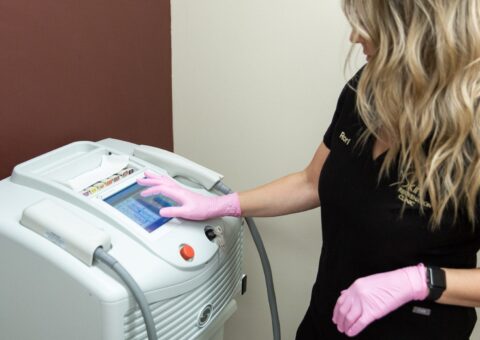
Laser skin resurfacing in the Twin Cities ranges from roughly $400 to $800 per session for non-ablative treatments and $1,500 to $4,000 per session for ablative or hybrid resurfacing. Moxi runs about $600 to $900 per session, BBL Hero $500 to $800, Halo $1,500 to $3,500 depending on areas treated, and full-face CO2 resurfacing $3,000 to $5,000. Cost depends on the device, the treatment area, the provider’s experience, and the number of sessions in your plan.
Short version: For most patients with sun damage, fine lines, or texture concerns, laser resurfacing delivers more measurable improvement per dollar than years of high-end skincare products.
Cost is the question every patient researches before they ever walk into a consultation. The honest answer is that laser skin resurfacing is one of the wider-priced categories in cosmetic dermatology, with the same patient potentially seeing quotes from $500 to $5,000 across different clinics for treatments that all get called “laser resurfacing.” This guide breaks down what each laser actually costs in the Twin Cities market, what drives the price, and how to evaluate whether it is worth the investment for your specific situation.
What Does Laser Skin Resurfacing Cost in 2026?
Laser resurfacing prices fall into two clear tiers. Non-ablative treatments work without removing surface skin and tend to require multiple sessions, with each individual session priced lower. Ablative and hybrid treatments remove a controlled layer of damaged tissue along with deeper collagen stimulation, which means more dramatic single-session results and a higher per-session price.
These ranges reflect typical pricing across reputable Twin Cities clinics in 2026. Pricing well below the low end of these ranges should be a flag, not a deal. Laser resurfacing requires capital equipment costing hundreds of thousands of dollars, ongoing maintenance, and trained clinical staff. A clinic charging half the market rate is usually cutting corners somewhere that affects the patient.
What Drives the Price?
Five factors set the price you pay. The device itself is first. Premium laser platforms like Sciton Halo and Moxi cost significantly more to operate than older or lower-end devices, and that cost is reflected in pricing. The treatment area is second. Full-face is the standard pricing benchmark, but most clinics offer face-and-neck, face-neck-and-chest, or smaller spot treatments at scaled rates.
The provider’s experience is third. A nurse practitioner or physician with thousands of laser treatments behind them produces a different result than a newer practitioner working through their first hundred cases. That experience premium is real and worth paying for. Geographic market is fourth. Twin Cities pricing tends to land in the middle of national averages, lower than coastal metros and slightly above smaller markets. Bundled packages and membership pricing are fifth, and they often reduce the per-session price by twenty to thirty percent for patients committing to a full series.
What Is Included in Your Investment
A reputable laser package usually includes more than just the treatment time itself. Look for an initial consultation with skin assessment, pre-treatment skin prep recommendations, the procedure itself, all post-care products, and follow-up visits to track progress. At many Twin Cities clinics, packages also include touch-up treatments at no extra cost if results fall short of agreed-upon goals.
The cheapest quote rarely includes all of that. Patients quoted $899 for a Halo treatment elsewhere often discover the price excludes consultation, post-care kit, and follow-up, which adds another $300 to $500 once everything is accounted for.
Is Laser Resurfacing Worth the Cost?
The honest framework for evaluating worth is comparing the result you get against what the same money would buy in alternative skincare. A high-end clinical skincare regimen costs roughly $200 to $400 per month in retinoids, vitamin C, sunscreen, and growth factor serums. Over a year, that is $2,400 to $4,800 in topicals, which produces real but limited improvement, mostly in tone and brightness, and almost nothing in texture or pigmentation already set into the skin.
One Halo session at $2,500 typically produces visible correction equivalent to several years of consistent skincare and can address pigmentation and texture that topicals cannot reach at all. For patients with measurable damage, the per-result value of a single laser series usually outperforms several years of products.
Where the math fails is when a patient with minimal concerns commits to an aggressive treatment they did not actually need. A twenty-six-year-old with healthy skin should not spend $3,000 on Halo. The right tool at that age is preventative, less expensive, and lower-impact.
Financing, Packages, and Payment Strategy
Most reputable clinics offer financing through CareCredit or Cherry, both of which provide six to twenty-four month interest-free terms for qualified applicants. Package pricing is also worth asking about directly: a series of three Moxi treatments purchased together typically saves fifteen to twenty-five percent over individual sessions, and combined packages (Halo plus BBL, for example) often save more.
Membership programs at full-service clinics can also reduce ongoing costs by ten to twenty percent on every treatment, plus discounted product pricing, which makes them worthwhile for patients planning multiple treatments over a year.
Red Flags: When the Price Is Too Low
Be cautious of laser pricing that lands meaningfully below market. Common reasons a clinic can offer below-market pricing include older or off-brand devices, inexperienced operators working through training, settings dialed down so far that the result is minimal, or rushed sessions that cover too little surface area. The treatment may be technically the same on paper, but the result will not be.
Other flags include heavy upfront pressure to buy a multi-thousand-dollar package on the first visit, no clear post-care plan, no real before-and-after photos from the actual provider, and consultations done by a salesperson rather than a clinician. The fix is simple: ask who will be performing the treatment, what device they are using, and how many of these treatments they have personally done.
How to Decide If Laser Resurfacing Is Worth It for You
Two questions decide it. First, what is the gap between how your skin looks now and how you want it to look? If the gap is wide and topicals have not closed it, laser resurfacing is the most efficient way to close it. If the gap is small, a less aggressive plan is usually enough. Second, what is your timeline? If you have a milestone event in eight to twelve weeks, that determines which laser fits and which does not, regardless of what is theoretically the best match for your skin.
The most useful first step is a consultation where our clinicians evaluate your skin in person, walk through realistic results for your specific concerns, and provide a transparent quote for the exact treatment plan you need. We will not quote a treatment that will not deliver, and we will tell you directly when a less expensive option will get you the result you are after.